
https://www.thesymbolicworld.com/content/arrival-exodus-the-sci-fi-films-hidden-framework
Upon watching Denis Villeneuve’s Arrival for the first time, it surprised me. I was a teenager, waiting eagerly to find out how the alien invasion tropes would be subverted.
They were – far beyond my imagination.
After now having rewatched it, I was able to soak in further Villeneuve’s depiction of the life cycle. He manages to craft a film that feels so huge and yet so intimate.
From the beginning, and even in-between her extraordinary interactions with the alien creatures, Louise (played by Amy Adams) remains haunted by visions – ones that we’re led to assume have already happened. We see flashes of her daughter – happy memories which all lead to a tragic death. The film subtly portrays the emotional burden these visions place on her – the sense of loneliness in her life is palpable.
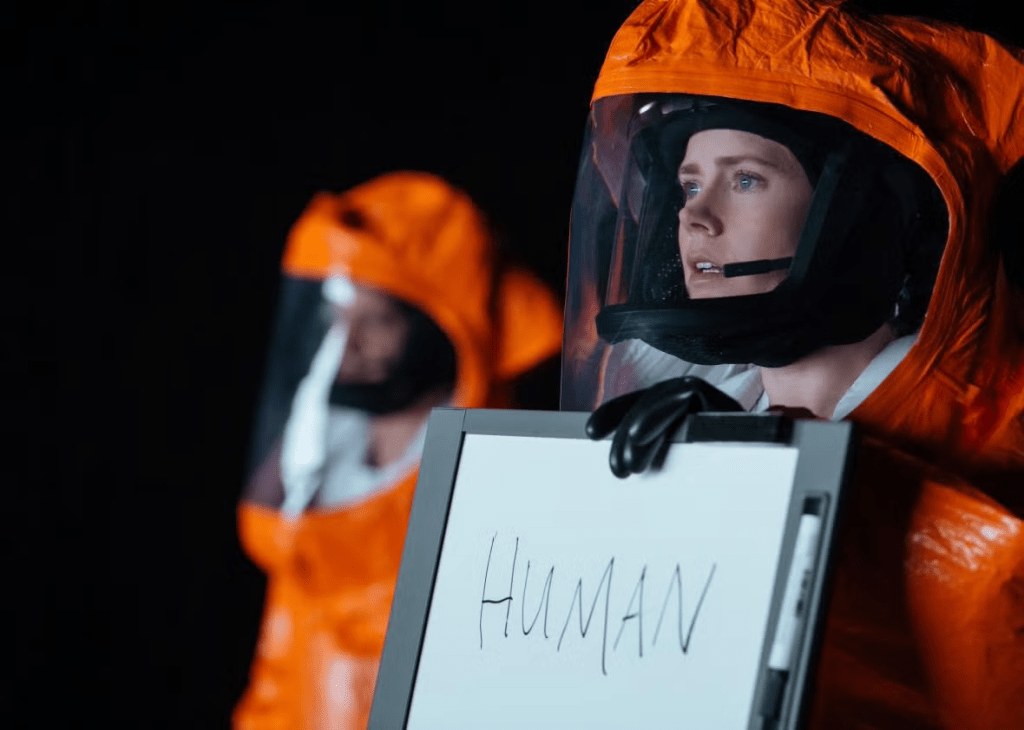
In his article explaining the film, G.G. Townsend eloquently lays out what distinguishes Arrival from other films about alien invasion. While this trope is typically used as a symbol for a topical social issue, Villeneuve uses it to explore some of our deepest fears. This sentiment is emphasised further by James Slattery: ‘Arrival sits uncomfortably in strict generic categories, because it uses them to particularly smart effect’. He also makes the argument that the film both ‘includes’ and ‘rejects a plethora of tropes’ (1, 2020). The unique tropes creep up on the viewer, despite Louise asking quite plainly “what is your purpose on earth?” early on.
https://slate.com/culture/2016/11/all-your-arrival-plot-questions-explained.html
As is common with the sci-fi genre, Arrival experiments with the concept of time. Only the filmmakers choose to take it to a level more philosophically inclined. The questions posed ask us to turn away from the stars and enjoy life while we can. Alas, the fear of death prevents this.
These fears are not only reflected in Louise, but also in the characters around her. As Louise fulfills her task of communicating with the ‘heptapod’ aliens, global pressure mounts. The government naturally sees these creatures as a security risk. They’re focused less on understanding them, and more on removing the potential danger they pose. Louise often runs into conflict with Colonel Weber (Forest Whitaker) as a result of this tension. This storyline sees the film follow a common trope associated with the alien invasion genre. But more than that, it highlights a fear of death that permeates throughout civilization.
https://www.vox.com/culture/2016/11/11/13587262/arrival-movie-review-amy-adams-denis-villeneuve
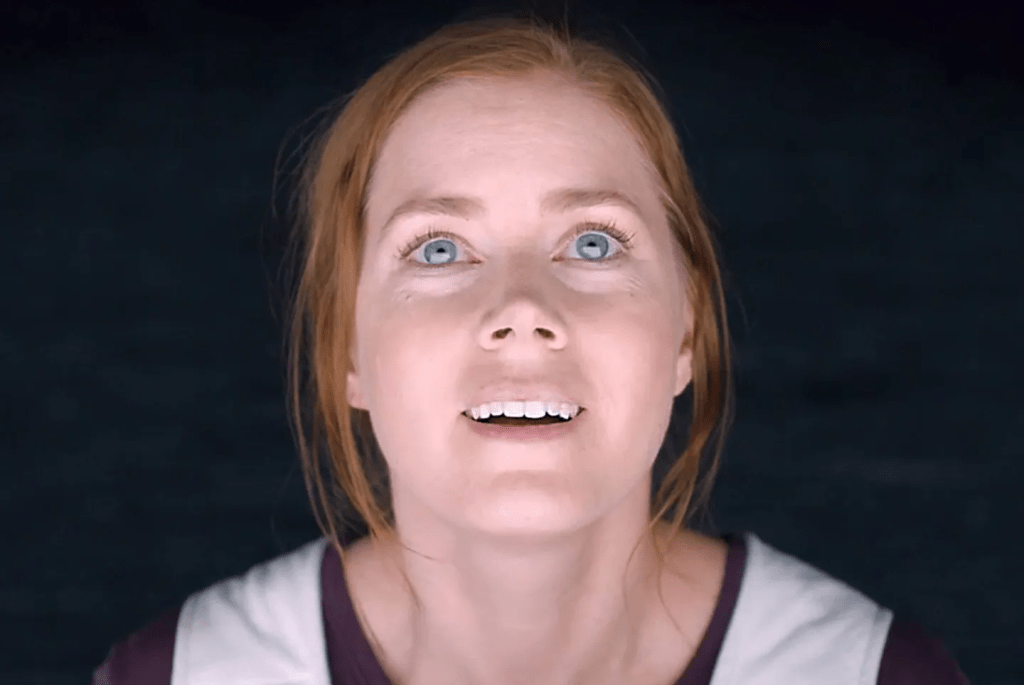
Louise remains on shaky ground with her employers as she grows closer with the heptapods. In her efforts to communicate with and understand them, Louise finds acceptance within herself.
The realisation that her flashbacks have actually been visions of the future functions as the film’s primary twist, as it recontextualises the entire narrative. It’s where the film reveals that this story of aliens coming to earth merely provides the backdrop for a highly personal journey. Through her experiences with the creatures, Louise captures a full picture of her life – the love, the fun, the peace, and the eventual loss. She comes to accept what once haunted her – “despite knowing the journey… and where it leads… I embrace it”. Even as she hugs the man whom she knows will leave her, she chooses to “welcome every minute of it”.
The aliens depart peacefully, thus preventing an inevitable war. In the face of these otherworldly events, Louise remains focused on a key question: “if you could see your whole life from start to finish, would you change things?”. She fully accepts that her visions are of the future. She sees the light in them, and the darkness. She lets it all unfold, for she believes the light will shine brighter. The inevitability of death doesn’t disrupt it, for it is also part of it.
A film that depicts a potential threat to civilisation ends with an individual accepting the natural life cycle. She moves on, in spite of all that transpired. The beauty of life’s narrative transcends the common alien tropes – thus resulting in a piece of art steeped in humanity.
If nothing else, Arrival remains a poignant take on the concept of our future – one that left me both rattled and in awe at once. The rewatch allowed me to soak in the nuance, for much like Louise, I knew where it was heading.
Reference
(1) Slattery, J. (2020) A Matter of Life and Death: Cinematic Necropolitics in ‘Arrival’, Free Associations, pg. 1
 Joseph's Media Blog
Leave a comment