Link to audio: https://drive.google.com/file/d/1NCkN-GUfWG91hywxfwOh0cZL9mbjx1F4/view?usp=share_link
The field in which I am researching promises a wide variety of sources. The formative years of rock (1960s-1970s) remain a goldmine for discussion, analysing and debate. Much of the inspiration I’ve received so far stems from YouTube. Within the visual essay space inhabits a wide variety of channels which dedicate themselves to music, with Anthony Fantano probably serving as the most significant figure in this space.
Another channel I find myself frequenting is Polyphonic, which is run by a person who dedicates a large portion of his content to the classic rock era, with artists such as Led Zeppelin and Pink Floyd serving as common topics of discussion. What he often does is he takes certain songs or albums and breaks them down. He explains what made them a big deal; a feature that has strongly influenced the core of my project.
And of course, there’s also an endless list of essays and books written decades down the line by actual historians, which will certainly find a place in my work. Robert Christgau’s article titled Is it Still Good to Ya? Fifty Years of Rock Criticism 1967-2002 (1, 2018) is a good example of the type of sources I have at my disposal. However, I’d still rather my persona be shaped by the more down-to-earth personalities I find online, as they were the ones who pointed me in this direction to begin with.
Here’s the map in all its blurrier-than-anticipated glory:
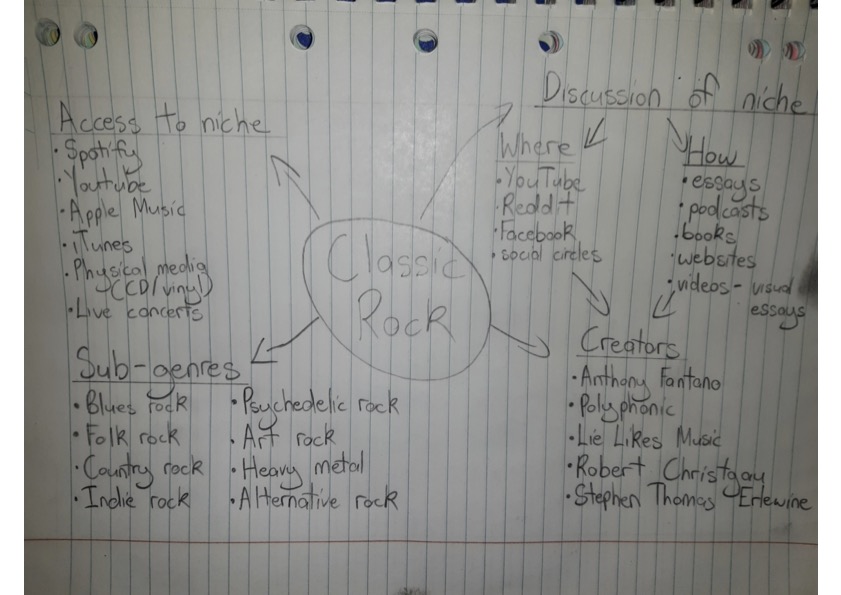
One thing I made sure to include here was a list of sub-genres that were essentially created during the 1960s-70s era of rock music – along with a few that came along later. I’m choosing to call attention to this due to the fact that classic rock in itself is less of a genre of music and more of an umbrella in which multiple genres have since become situated underneath.

An issue I can easily imagine coming up down the line concerns a lack of diversity. The artists I listen to just so happen to be mostly white males (I promise it’s not on purpose). For this reason, I will try my best to include discussions on the innovations that were made by the female artists of that time, such as Janis Joplin and the band Fleetwood Mac (as led by Stevie Nicks). A large part of the reason why I went this route was to encourage myself to discover more artists and gain a more well-rounded understanding of this time period, and diversifying my taste will take me further towards this goal.

There’s obviously still some development left to do, but there’s still plenty of time.
Reference
(1) Christgau, R. (2018) Is it Still Good to Ya? Fifty Years of Rock Criticism 1967-2002, NC: Duke University Press
 Joseph's Media Blog
Leave a comment